



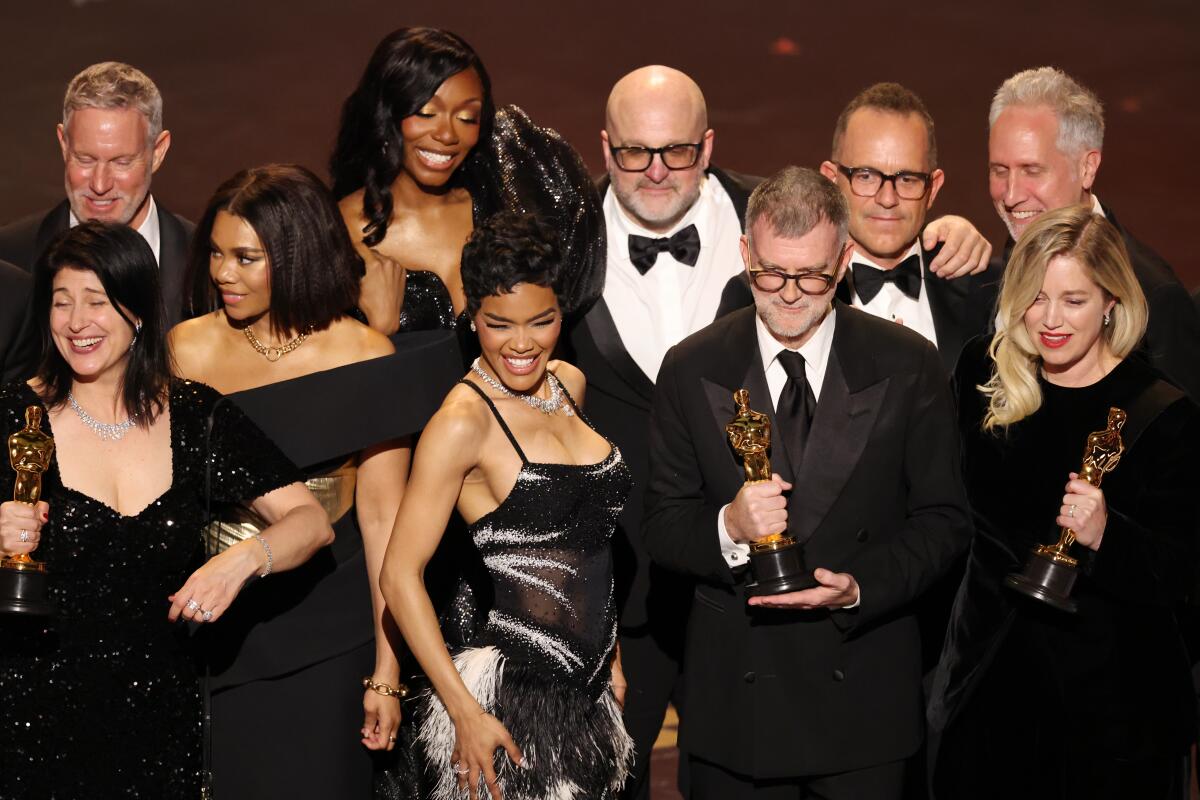





The annual celebration of this year’s music took place on February 1st, and after audience reactions have had time to set in, final opinions are noteworthy. The 68th Annual Grammy Awards featured a number of artists being recognized, and historic wins, such as Bad Bunny receiving album of the year with “DeBÍ TiRAR MáS FOToS”.
Bad Bunny was the first artist to win album of the year with a non-English, Spanish language album, sending ripples across the internet. Combined with the overwhelmingly positive critical and non-critical reception of his Super Bowl halftime show performance, Bad Bunny made his name well-known this year.
However, opinions vary greatly on the Grammys.
“Honestly, I was indifferent.” Aditya Singh, a senior at Newtown High School, said. “At this point, the Grammys don’t really matter.”
In the past decade, the growing sentiment that the music ceremony has become irrelevant has been discussed thoroughly. Many claim that the Grammys used to be more focused on artistic and boundary-defying music, rather than hits that merely broke into the mainstream.
“The Grammys significantly don’t matter anymore for a number of reasons,” a Legacy Press article highlighted. “Lacking credibility with their selection committee, giving awards to artists who only accumulate more album sales, and the committee missing out on actually acclaimed albums.”
Nevertheless, the increase in negative press surrounding the Grammys does not change the fact that many feel unhappy with the winners of the celebration. Even a month and a half later, people are still unhappy with certain turnouts.
“All the snubs are still wild now. Like Kendrick not winning song of the year for Luther, instead it was given to Billie Eilish. Still crazy.” Singh commented.
Audiences of the Grammys have not forgotten results, even when the ceremony has quickly faded into irrelevancy since February. Eilish has received 10 Grammy awards since the start of her career in 2015, and won song of the year for her single “Wildflower” this year.
“[The Grammys] are just whoever the ‘music elites’ choose to promote,” Singh stated.
The question as to how exactly the Grammy committee selects its nominations and winners has gone unanswered for decades, but it has certainly created a rift in audiences. Many, like Singh, claim that the Grammys clearly do not support artists, representing the fatigue surrounding the celebration.
According to Singh, the discussion of the performances and awards did not last long on social media feeds.
“People stopped talking about the performances like five hours after, at least on my fyp,” he said.
The short attention span surrounding the event may reflect how quickly music culture moves online, or a greater lack of appreciation for the Grammys.
Despite criticisms, the Grammys did not go without compelling moments. Justin Bieber’s seven minute, shirtless performance of “Yukon” stirred up many, and Lady Gaga’s extravagant arrangement of “ABRACADABRA” turned heads too.
Ultimately, with the rise of streaming platforms, online music communities, and rapidly changing trends, many claim the music industry now moves faster than an annual award show can keep up with.
“Their significance has declined dramatically,” he said. “Music in 2026 is very diverse and versatile, something the Grammys don’t really reflect, no matter how hard they try.”