













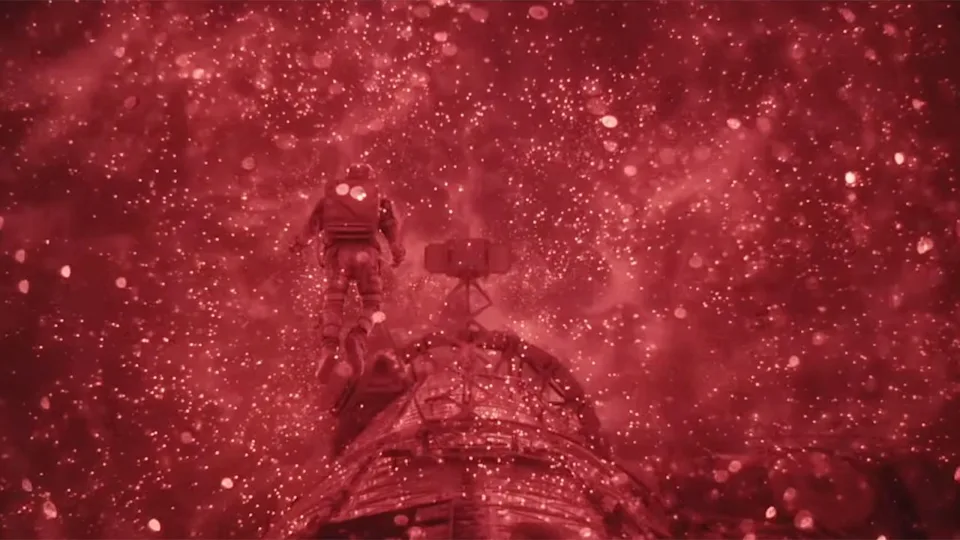
When Project Hail Mary was released earlier this year, it looked like a typical science fiction movie: a dying sun, a dangerous mission, and one man sent into space to save humanity. Directed by Phil Lord and Christopher Miller and adapted from Andy Weir’s novel, the film follows Ryland Grace, a science teacher played by Ryan Gosling, who wakes up alone on a spaceship with no memory of who he is or why he was chosen for the mission.
As the story slowly unfolds, Grace realizes Earth is dying. A microorganism called Astrophage is draining energy from the sun and threatening life across the planet. The Hail Mary mission becomes humanity’s last chance at survival. But beneath the science and suspense, Project Hail Mary is really a story about loneliness, fear, and the need for connection.
At the beginning of the film, Grace is completely alone. The two astronauts who were supposed to help him have already died, leaving him trapped in space with no one to talk to and no clear idea of how to save the world.
The silence around Grace feels endless. Every problem he faces becomes heavier because he has nobody to share it with. Grace spends much of the beginning afraid, confused, and overwhelmed by the pressure of carrying humanity’s future on his shoulders.
Everything changes when Grace encounters Rocky, an alien engineer from another civilization facing the same extinction crisis. In many science fiction stories, first contact leads to violence or distrust. Project Hail Mary takes a different approach. Instead of becoming enemies, Grace and Rocky slowly learn to trust each other.
Even though they cannot speak the same language and experience the universe differently, they continue trying to understand one another anyway. Some of the film’s strongest moments are not the action scenes, but the more impactful ones, them teaching each other their language, solving problems side by side, and finding humor in the middle of fear. Those scenes make their friendship feel genuine and emotional because they remind viewers how important connection is, even in the darkest situations.
This relationship becomes the emotional center of the story. At a time when disagreement so quickly turns into division, Project Hail Mary suggests that survival depends more on empathy than power. Grace and Rocky are connected not because they are similar, but because both are terrified of losing the people depending on them back home.
Earlier in the story, before Grace ever meets Rocky, he admits he is afraid of joining the mission. He says, “I would choose just not to go at all. I don’t have the bravery gene that you all have.” Yao Li-Jie, the commander of the primary crew of the Hail Mary spacecraft, responds, “Trust me. It’s not a gene. You just need to find someone to be brave for.”
At first, Grace cannot fully understand what Yao means. Fear controls many of his decisions, and he constantly doubts whether he is capable of completing the mission. However, after meeting Rocky, Grace finally finds someone worth risking everything for. Their friendship gives him purpose. Instead of thinking only about escaping or surviving for himself, Grace begins making sacrifices to protect someone else.
By the end of the story, he finally understands that courage does not come from being fearless. It comes from caring about someone enough to keep going even when everything feels impossible. The message is then revealed: nobody survives alone. Project Hail Mary is not only about saving Earth, but about how compassion, friendship, and connection give people the strength to survive even the darkest situations.