

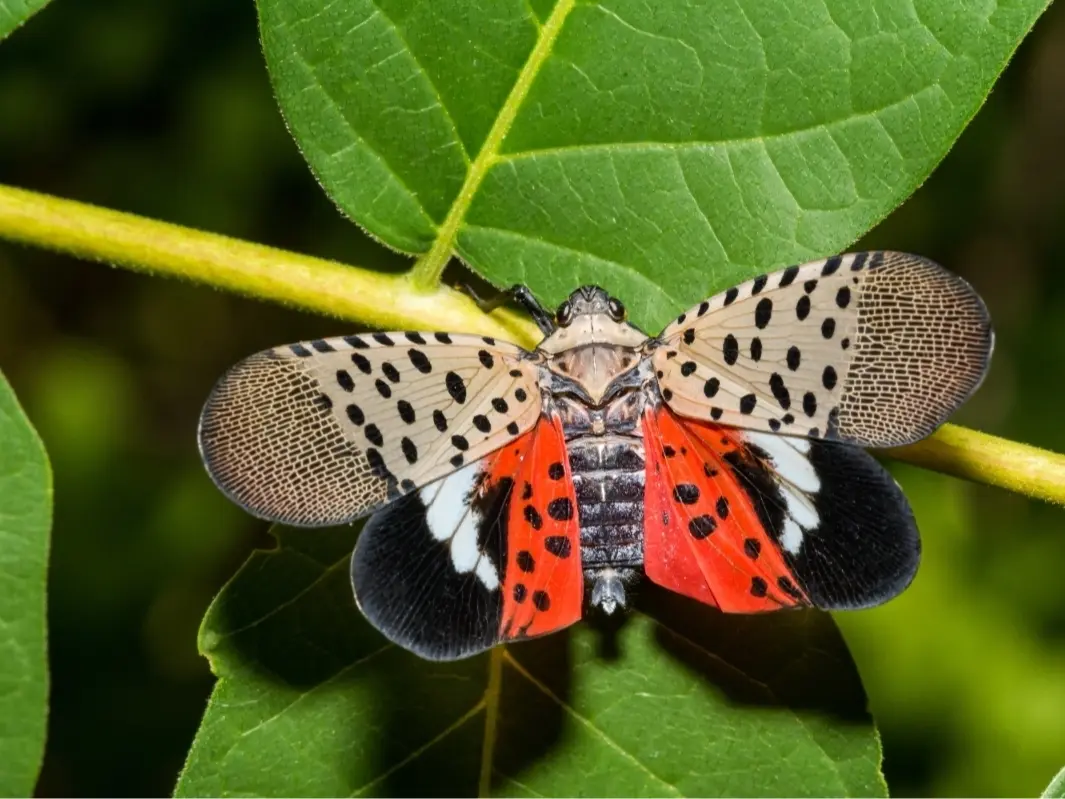
Many people are unaware of the dangers posed by the spotted lanternfly and its potential long-term impact on our environment. originally from China and Vietnam, and have made their way to America through a shipment of stones from China.
Over the years, they have become a growing concern due to their rapid spread and severe impact on agriculture and ecosystems.
Spotted lanternflies started to spread throughout the U.S, and are now in 21 states, wreaking havoc on our plants.
With the increasing presence of the spotted lanternfly, people will question how we can stop this spread and contribute. Some may even ask how invasive species migrate and find themselves in new regions.
“Invasive species can spread in different ways,” explained Aimee Ruetzal. “Humans can transport them unknowingly in cargo and on ships. As temperatures and climate shift, warmer temperatures allow species to migrate to new areas.”
With the rising numbers of spotted lanternflies, both students and teachers have noticed an increase in their presence around the campus. “I personally have noticed a lot more lantern flies around our school buildings,” says Ms. Reutzal
Not just our schools but around our town, “I’ve seen 4 to 5 of them in the past day around Main Street,” says Sophomore Anthony.
These insects are becoming a common sight day by day around town as the infestation grows, and many will worry about the long-term effects on the community
The USDA (United States Department of Agriculture) has dealt with this problem, and how the USDA will proceed to deal with the infestation in the following years, and the answer to that question is, for the most part, spreading awareness through various campaigns
While the APHIS (Animal and Plant Health Inspection Service) mainly deals with the eradication and detection of spotted lanternflies.
Senior Christian Malan says, “I’ve had a rough encounter with spotted lanternflies in the past, affecting my parents’ garden.”
The battle against the spotted lanternflies is far from over, but everyone can play a role in preventing the spread of spotted lanternflies.