


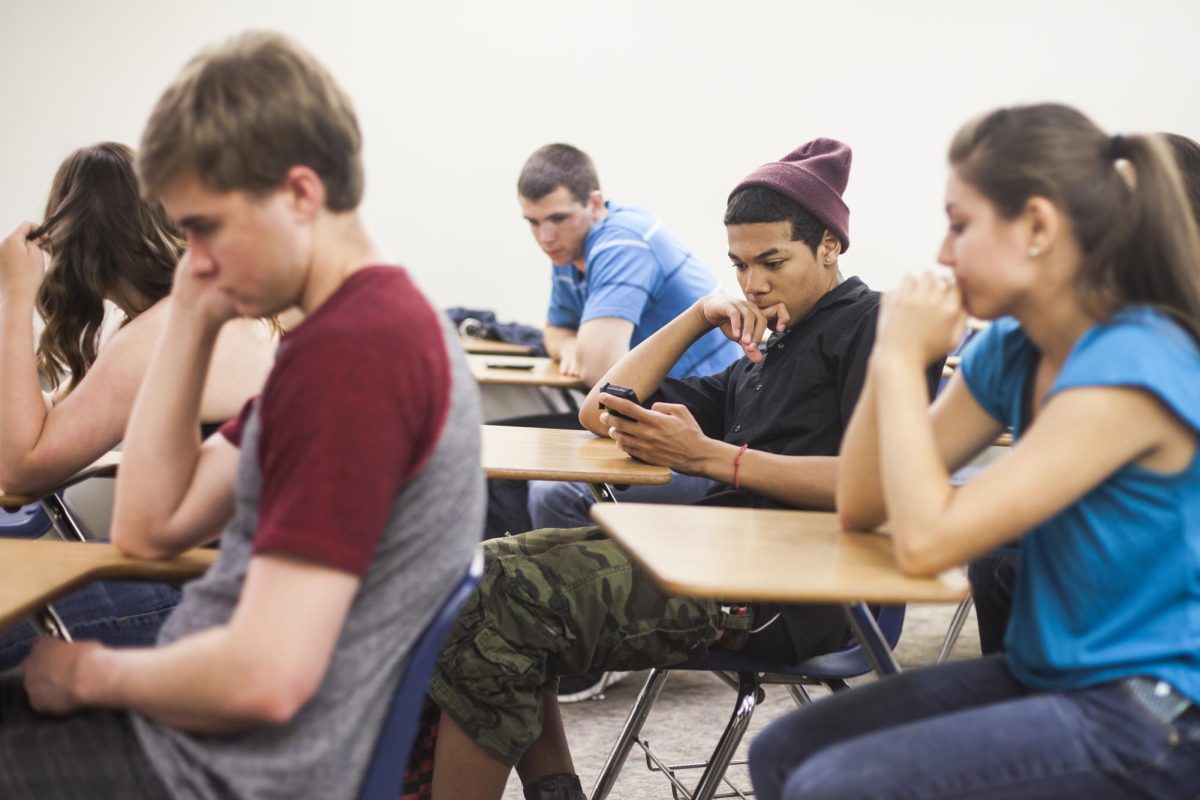












Danbury High School’s (DHS) new cell phone policy requires students to place personal electronics in classroom cubbies, and it has reshaped daily routines across campuses this year. It has prompted mixed reactions from students and teachers over how the rule affects learning, concentration, and classroom culture.
The rule has been designed to reduce distractions and reinforce the school handbook’s ‘no phones during class’ guideline. The 2025-2026 policy has left students torn, as some say the rule has helped them focus and improve their grades, while others say it’s overly strict or inconsistently enforced. Interviews with students and teachers reveal a wide range of experiences, highlighting how the policy’s impact often depends on personal habits, teacher enforcement, and student attitudes toward phone use.
A step towards focus
For some students, the new phone rule has been a major turning point.
Junior “Jayla Minn,” who requested to use a pseudonym, said she used to be on her phone “all the time” during class. She admits that this habit hurt her grades.
“I’d [get] bored and wouldn’t want to listen to the teacher,” Minn said. “My grades dropped a lot.”
Minn often relied on flex periods to make up missing assignments. She typically earned B’s, but after being forced to detach from her phone, she began earning A’s.
The adjustment wasn’t easy in the beginning. During the first weeks of school, not having her phone made her anxious–she’d instinctively reach for her pocket during lessons, only to remember the phone was locked away across the room. But by mid-September, she realized she was more focused.
“Now I forget my phone is even in the cubby,” she said. “Sometimes I almost walk out without it.”
Minn believes the rule is clear, fair, and necessary. She has even noticed classmates with similar habits improving their grades, though she also sees students trying to get around the rule by hiding phones in their pockets or behind laptop screens. This inconsistency, she believes, makes it harder for the policy to work the same for everyone.
An anecdote from one of her classes stands out: during an assignment that later counted as a quiz grade, she was able to “lock in” thanks to having no phone nearby, while many classmates left the work unfinished.
Mixed feelings on enforcement
Not all students are fully on board.
“Lynn Vella,” a sophomore who also used a pseudonym, said she understands the intention behind the rule but finds it excessive in certain situations.
“I get that the school wants us off our phones, but [applying] the rule during study hall or in the library feels like too much,” she said.
Vella says her study hall teacher doesn’t enforce the cubby rule strictly, but still discourages phone use. For her personally, the policy hasn’t changed how quickly she completes homework, and she still sees students using phones during class despite the rule.
She is unsure whether she would change the policy, as she recognizes that while some students need the structure, “the majority of students don’t have a problem with it.”
Junior Isabella Valenzuela, who agreed to use her real name, said the rule hasn’t affected her much because she rarely used her phone during class. Still, she sees both benefits and challenges.
“Last year, I’d sneak a peek sometimes even when I had work to do,” she said. “Now I finish more in class and have less homework.”
Valenzuela feels students have mostly adjusted but says enforcement varies from teacher to teacher; some expect phones locked at all times, while others are more relaxed.
Her only complaint is the small inconvenience of “having to keep track of the cubby key.”
She does believe that students who finish their work early should be allowed to access their phones.
Teachers see gains and challenges
Business teacher Robert Williams said the policy has been a major improvement for the classroom environment.
“It helps with student engagement and is a positive catalyst for learning,” Williams said.
He estimates that he has “five to ten more minutes of [productive] teaching time” each period now that he does not have to constantly “yell or police” students about their phones. Over time, he said, the rule has made his job easier–especially when rules comply.
Still, there are hurdles. Some students ignore the rule entirely, and others claim dead laptops or missing chargers as excuses to use their phones. Williams also noticed complications when students with medical or translation needs misuse their phone privileges, leaving teachers uncertain about how to respond.
Teachers were briefed on the upcoming policy during a staff meeting last year, where they were given several cubby models to choose from for their classrooms.
Williams believes the policy prepares students for “real life,” where workplaces often expect employees to stay off their phones and remain engaged.
Consequences
The updated cell phone expectations align with the student handbook: violations lead to escalating consequences, from detentions to phone confiscation, and eventually, in-school suspension.
Despite these consequences, some students still attempt to get around the system. During class observations, students were seen pretending to place phones in cubbies while secretly slipping them into their pockets.
Ending
As DHS students adjust to the phone-free classrooms, the effects of the new policy continue to unfold. Some credit the rule with better grades and stronger focus, while others question its strictness and uneven enforcement. Whether the policy becomes a long-term fixture may depend on how many students adapt, and how teachers balance structure with flexibility in the months ahead.