








Danbury High School’s Movement to Music program was previously held in the fall and spring but is now performed in the middle of the school year. Michael Burnett operates Movement to Music, and all of his classes participate. Students practice and eventually perform in the school auditorium.
“All of my classes [participate] in Movement to Music: µ,” said Burnett.
According to Burnett, the project originally began as a Speech Arts assignment, but now all of his classes participate, totaling over 100 students. He teaches six classes this year. The tradition began with a previous Speech Arts teacher, and Burnett decided to continue it.
“It’s a tradition that I continued. It has been happening for over 25 years or 30 years,” said Burnett.
Burnett knows that when students enter his class, they aren’t expecting to perform on stage. He avoids calling it a dance class because he does not formally teach dance. Although it may seem intimidating at first, the focus is on having fun and collaborating.
“There’s a reason we don’t call it a dance performance. I don’t teach a dance class,” said Burnett.
His students create the choreography themselves. Each group works together to come up with ideas and decide how their performances will unfold.
“The purpose of Movement to Music is about students working together and collaborating,” said Burnett.
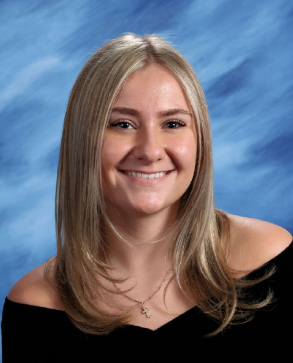
Two of Burnett’s students, Irina Masallo and Jhari Williams, have participated in the program for several years. Both explained that the experience helped them step outside of their comfort zone.
“I actually felt so shy in the beginning, and it was my first day of experiencing something like this,” said Massallo.
According to Massallo and Williams, the process of Movement to Music is a different experience every day. Everyone has a different feeling and understanding coming into class.
“Every single day there is a different vibe, energy, excitement, and frustration,” said Massallo.
In Movement to Music, students focus on collaborating, creativity, communication, and positivity. Students do not need prior dance experience to be in this class.
“Experience and dancing has little to do with experience because it’s really [about]collaborating with people, hearing ideas, and making sure everyone is heard,” explained Massallo.
Instead of being told exactly what to do, students are encouraged to be creative and develop their own routines.
Williams expresses how it’s about “creating a dance rather than [being] told to do one.”
Rather than assigning the students a certain performance Burnett gives the students a theme. This year’s theme was the music from the 1980s and 1990s, and students selected songs that fit within that theme.
“The students pick an appropriate song for the general audience that [fits the] 80s or 90s theme,” said Burnett.
On performance day, students experience mixed emotions about how they think the performance will go. While some feel nervous, everyone is supporting each other.
“All the pressure of performing can kinda get to you, but on the day, you just feel that overwhelming support to push you,” said Williams.
This is a long-term project completed mostly during class time. Students rehearse in class, with only one after-school rehearsal and a final run-through on performance day.
“They do have 1 after-school rehearsal, but everything else is done right during [the] class period,” said Burnett.
Working in groups can sometimes be challenging, as not all students enjoy collaboration, the people they’re working with, or agreeing on ideas.
“Even if you love working with everyone, once in a while it’s never easy,” said Williams.
Burnett, Williams, and Masallo all know that one does not have to be skillful to be in Movement to Music; it’s about collaborating, creativity, having fun, and communication.
“Most importantly, [it’s about] their communication skills with each other in their group,” said Burnett.
“It’s not like we’re forced to come together, it’s a common goal that we all [share],” said Masallo.
Burnett said he loves watching students overcome their fears and take healthy risks that they are scared of doing on stage.
“Even if they are nervous on stage, I love watching students [who have] no experience [go out] on stage and take healthy risks,” said Burnett.
When the performance comes to an end, Burnett loves the excitement, cheering, and support from his students and audience members.
“I feel like it’s the best part of our school — watching people cheer [each] other [on],” said Burnett.